

Infrastructure in British Columbia, Canada
How does British Columbia’s (B.C.) infrastructure create opportunities for global trade, digital innovation and sustainable energy?
B.C. offers a robust and modern infrastructure network that supports economic growth and global connectivity.
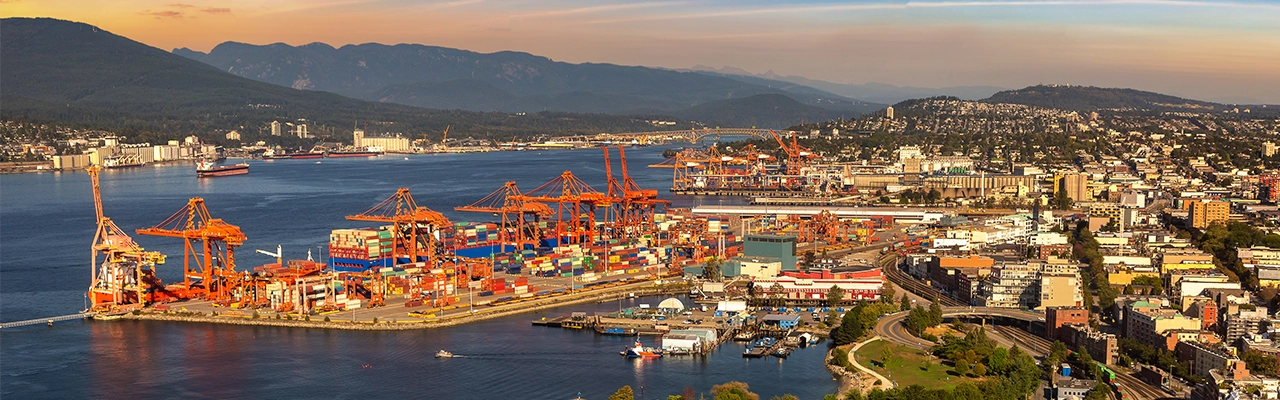
- Comprehensive Transportation Network: The province is connected by an extensive system of roads, railways, airports and marine ports. It hosts Canada’s largest port in Vancouver and one of North America’s most strategic harbours in Prince Rupert, enabling global trade and year-round shipping.
- Strong Digital Connectivity: 95% of households have access to reliable high-speed internet. The Government of B.C. continues to expand access to rural areas and remote workers, ensuring businesses and communities stay connected to the digital economy.
- Commitment to Clean Energy: B.C. generates nearly all its electricity from renewable sources, supported by a robust clean energy sector that keeps power affordable and dependable for homes and businesses.
B.C.’s Infrastructure Advantages
Roughly 57,100 kilometers of paved roads, 9,588 kilometers of rail tracks, 36 certified airports, and over 30 diverse marine ports connect the communities of British Columbia (B.C.) with the rest of the world. Over 95% of households in B.C. have access to broadband internet, providing a reliable and fast connection to the digital economy. See how modern infrastructure keeps British Columbia’s economy thriving.
- B.C. is home to Canada’s largest port, the Port of Vancouver, and can handle the most diversified range of cargo in North America, while the Port of Prince Rupert is the deepest natural harbour in North America and is ice-free year-round.
- Trucking companies operating in B.C. employ over 26,000 people, providing efficient and flexible door-to-door transportation throughout the province.
- There are 36 certified airports in B.C., providing domestic and international air service to businesses buying goods from B.C. as well as for delivering materials and merchandise to buyers in B.C.
- 95% of households in B.C. have access to at least 50 Mbps internet speeds, and the provincial government is investing heavily to provide high-speed internet access for the growing telecommuting workforce and rural communities of B.C.
- Nearly 98% of the electricity generated in British Columbia comes from clean or renewable resources and over 130 members in the Clean Energy industry work hard to generate reliable commercial and residential electricity in British Columbia to keep energy costs as low as possible.
B.C. Provincial Infrastructure
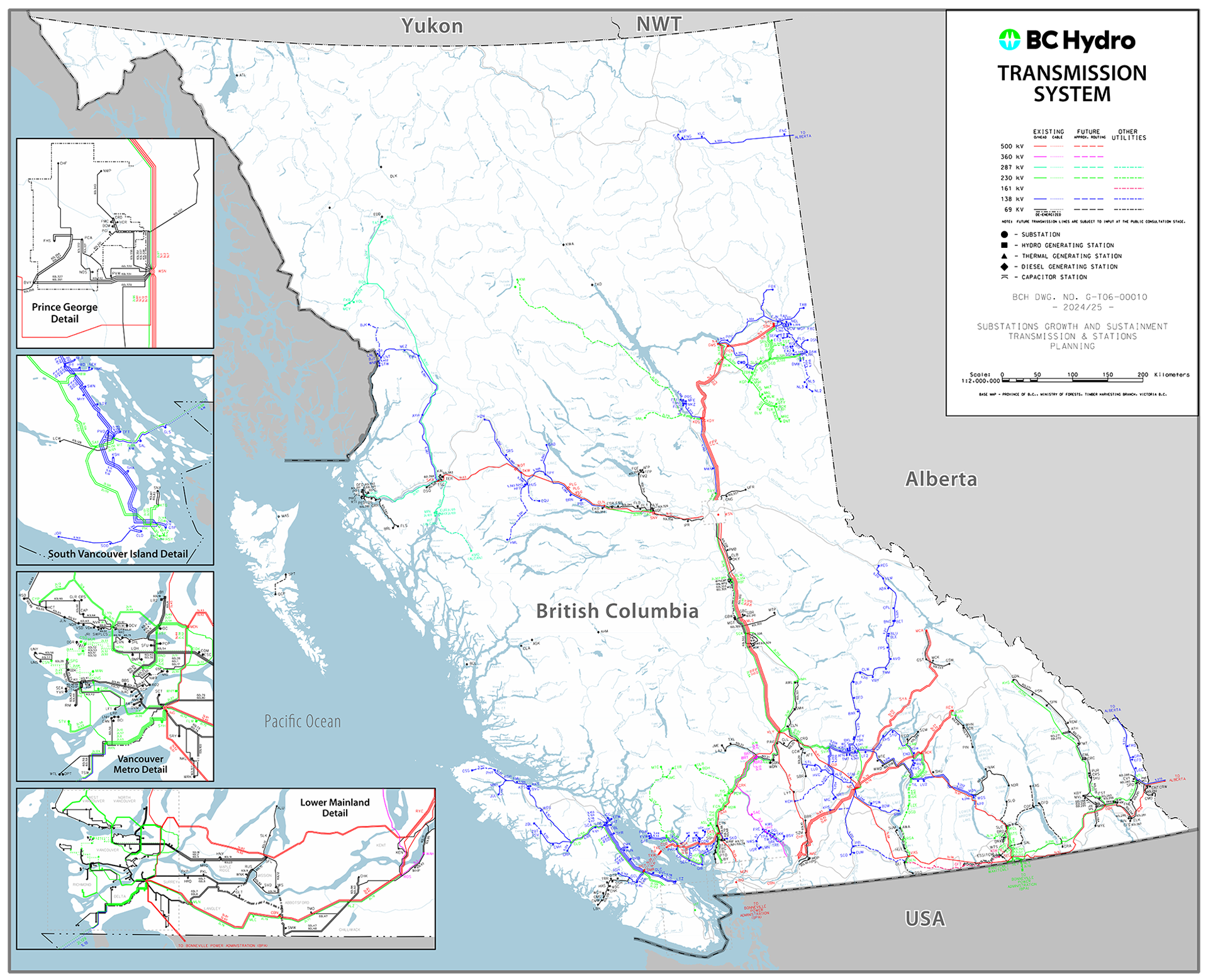
British Columbia Provincial Electrical Energy Grid
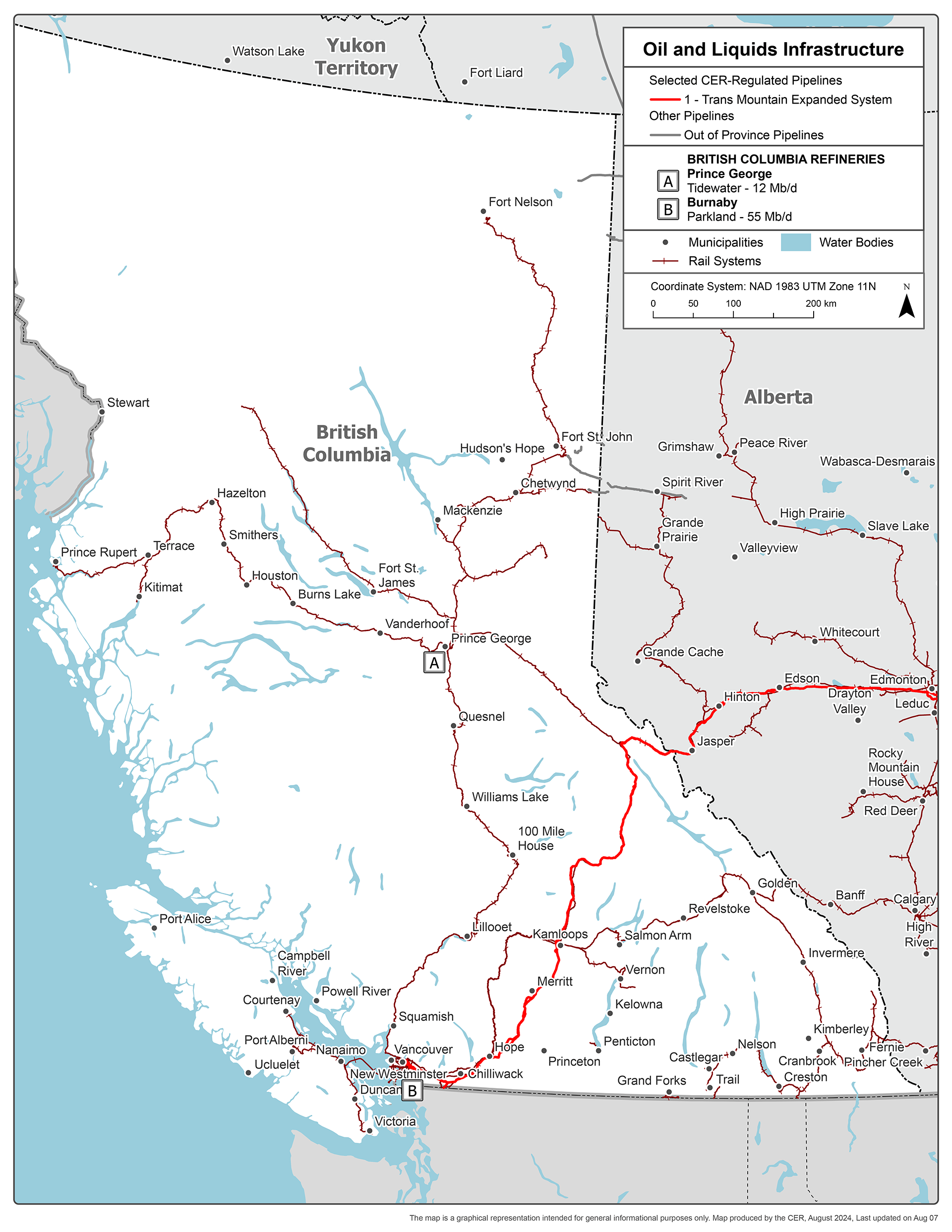
British Columbia Oil & Liquids Infrastructure
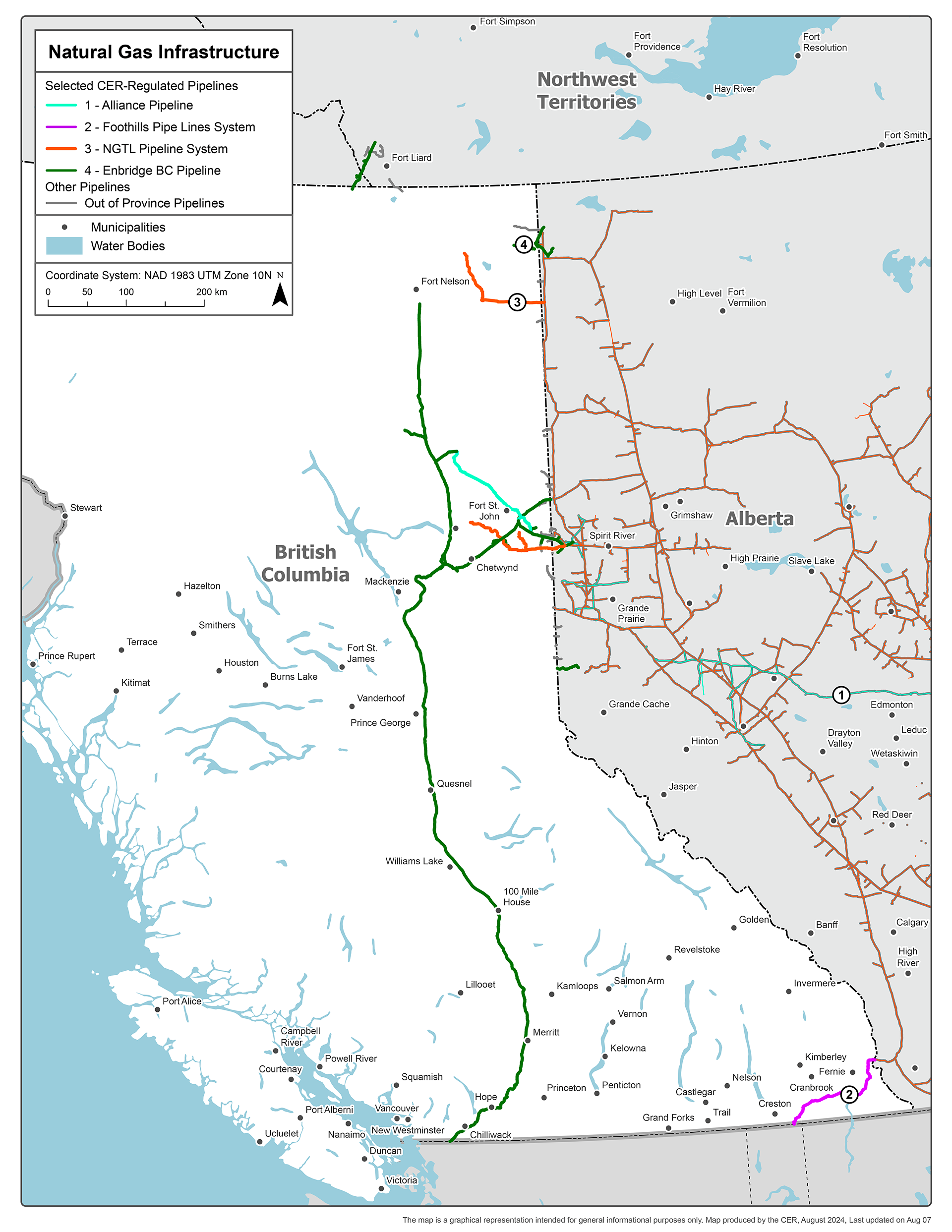
British Columbia Natural Gas Infrastructure
Learn more about B.C.
Discover the sector or regional advantages to support your business. Learn more about community engagement and consulting with Indigenous people and First Nations communities in British Columbia.