





Life Sciences Series: Article 2 – Radiopharmaceuticals
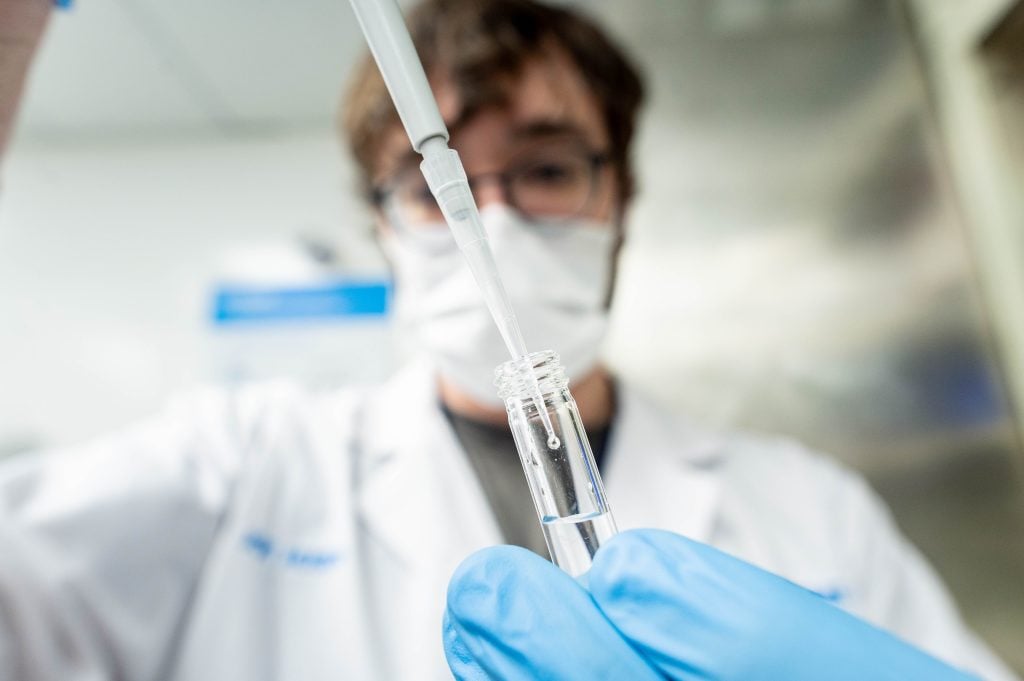
British Columbia powering Canada’s leadership in medical isotopes and radiotherapeutics
British Columbia (B.C.) has emerged as a driving force in Canada’s rapidly growing medical isotope and radiotherapeutics ecosystem — home to world-class research facilities, globally recognized companies and a collaborative model that connects science to real-world health outcomes. At the heart of this success is TRIUMF, Canada’s particle accelerator centre, and its Institute for Advanced Medical Isotopes (IAMI) in Vancouver, B.C. — together showcasing how British Columbia’s research excellence is strengthening Canada’s leadership in global health innovation.
“Alchemy, is what I like to call it – where we convert one element into another using a particle accelerator” – Paul Schaffer, former TRIUMF Life Sciences Division Director
Building the foundations of Canada’s isotope strength
Since its founding in 1968, TRIUMF has evolved and expanded its science program and become one of the world’s most versatile accelerator centres. Using its world’s-largest cyclotron (a circular particle accelerator originally built for particle physics research) and an additional suite of compact accelerators, TRIUMF pursues an internationally renowned portfolio of discovery science. The lab also boasts a long-standing commitment to commercialization and technology transfer, including intellectual property development and company creation. Today, TRIUMF anchors a provincial network of research and innovation that includes universities, BC Cancer and a growing number of life sciences companies working at the intersection of physics, chemistry and medicine.
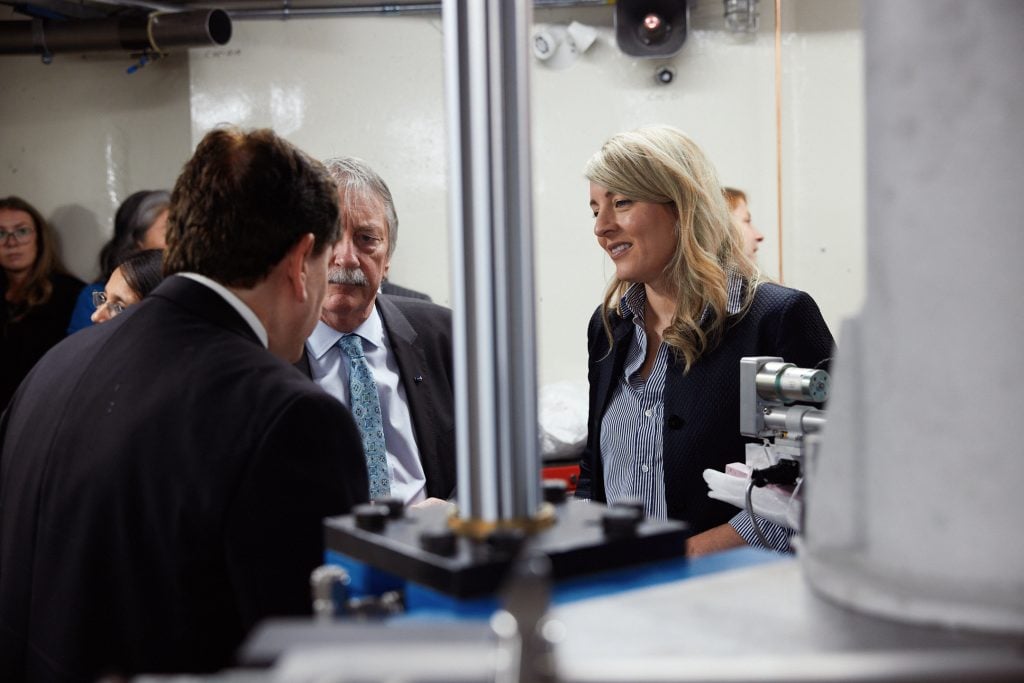
Through facilities like IAMI, TRIUMF and British Columbia have created Canada’s most advanced hub for developing and producing rare, exotic forms of matter like medical isotopes — which are essential tools for both diagnosing disease (e.g., using positron emission tomography, or PET scanning) and, increasingly, for targeted therapies that treat diseases directly. Designed to move discoveries from lab bench to clinical use, IAMI includes state-of-the-art cyclotrons, GMP-compliant radiochemistry suites, and collaborative spaces connecting academia, hospitals and private-sector partners.
This infrastructure directly supports the goals of Canada’s Biomanufacturing and Life Sciences Strategy — to expand domestic research and manufacturing capacity and strengthen national health resilience.
British Columbia’s radiopharmaceutical impact across Canada and on the global stage
British Columbia’s leadership in isotope innovation has already had national and international impact.
TRIUMF, in collaboration with BC Cancer and the University of British Columbia (UBC), achieved the first made-in-Canada cyclotron production of technetium-99m (Tc-99m) — the workhorse isotope used in millions of diagnostic scans each year. Building on this achievement, TRIUMF spun off an award-winning company, ARTMS, which designs and manufactures target systems for cyclotrons to enable regional production of Tc-99m. This effort secures Canada’s isotope independence and reinforces British Columbia’s role in fortifying stable, domestic supply chains of critically needed medical isotopes
More recently, British Columbia researchers have advanced the development of actinium-225 (Ac-225), a rare isotope driving next-generation targeted alpha therapies for cancer. Referred to as “the world’s rarest drug,” Ac-225 is a new radiotherapeutic that delivers highly localized radiation to cancer cells, offering new hope for patients with otherwise untreatable diseases.
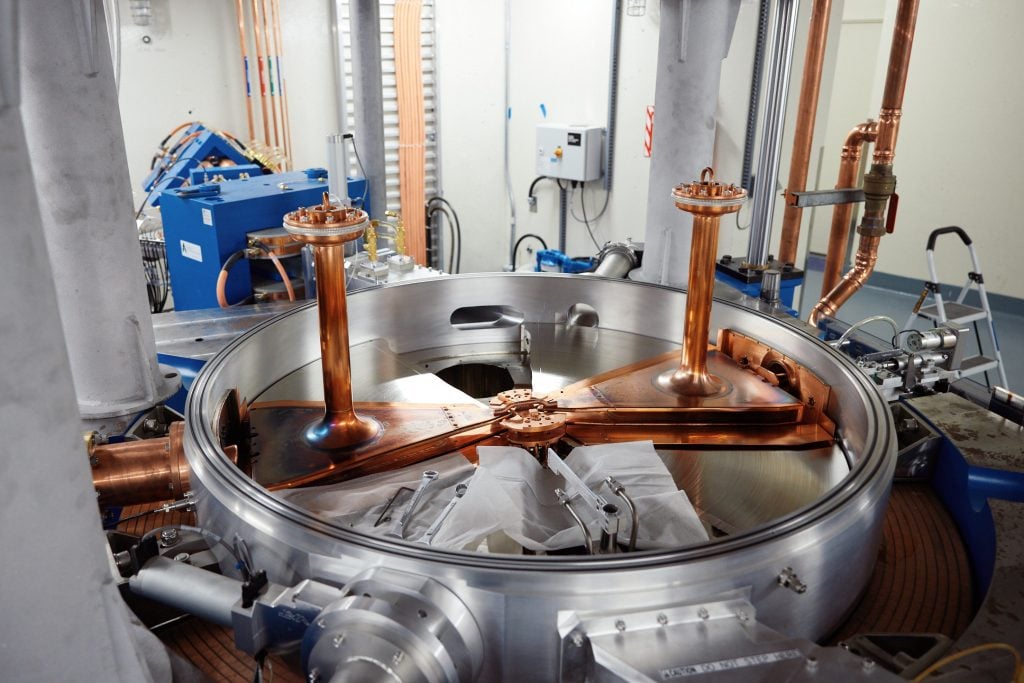
TRIUMF’s commitment to driving impact through commercial partnerships dates back to 1978, when the lab first joined with Atomic Energy Canada Limited (AECL) to begin producing medical isotopes for national and international markets. Today, with partner BWXT-Medical, TRIUMF supplies more than 1.8 million patient doses of isotopes annually, supporting disease scans and treatments for patients in Canada and around the world.
With this integrated research infrastructure, supply-chain expertise and network of commercial partnerships, British Columbia is uniquely positioned to help Canada meet rising global demand for research and development into Ac-225 and related isotopes — a market projected to expand rapidly in the coming decade.
What sets British Columbia apart
British Columbia’s influence in this sector is more than infrastructure — it’s ecosystem.
- A nexus of collaboration: TRIUMF’s location on the UBC campus links directly to one of Canada’s most dynamic biotech corridors, connecting world-class scientists with clinical partners and entrepreneurs.
- Integrated science-to-market pipeline: With a dedicated commercialization portfolio, TRIUMF and its partners are ensuring that made-in-B.C. isotope innovations are stewarded and translated into commerciality relevant opportunities through licensing and spin-offs that scale nationally and globally. This includes developing and stewarding new radiopharmaceuticals from lab bench to market, innovating and expanding cyclotron-based technologies, and more.
- Global partnerships: British Columbia-based researchers collaborate internationally, ensuring Canada remains deeply connected to global isotope research and therapeutic development.
- World-leading infrastructure: With TRIUMF and IAMI, British Columbia is bringing online world-unique infrastructure that enables the full value chain within radiopharmaceutical development. The IAMI facility, together with the accelerator complex available and accessible at TRIUMF, offers extensive isotope production of even rare and exotic diagnostics and therapeutic options; radiation-safe hot labs; and wet chemistry and GMP-enabled facilities. This unique concentration of capabilities will empower made-in-B.C. radiopharmaceutical research into promising new drugs to treat cancer and enable to bring them into the clinic for Canadians.
- A hub for talent and training: From training over 100 co-op students per year to serving as a training ground for advanced skills development, TRIUMF is creating the highly qualified science leaders of tomorrow and driving growth for Canada’s knowledge economy.
For governments, this represents a powerful model for how provincial innovation infrastructure can deliver national benefit. For investors, British Columbia offers a concentration of facilities, talent and proven commercialization outcomes that reduce risk and accelerate return.
From discovery to enterprise: British Columbia’s radiopharmaceutical commercial impact
From isotopes to accelerator-inspired innovation, British Columbia’s leadership is reflected in a growing roster of successful companies that originated from TRIUMF’s research base:
- ARTMS Inc., which pioneered a cyclotron-based system for Tc-99m and PET isotope production, was acquired by Telix Pharmaceuticals in 2024 for roughly US$82 million and maintains substantial operations in Vancouver.
- Ideon Technologies Inc. applies B.C.-developed subsurface imaging technology for 3D & 4D imaging in the global mining sector, exporting Canadian innovation and expertise worldwide. They recently announced a major partnership with Rio Tinto, which will see Ideon deploy advanced geophysical sensing solutions across multiple sites to improve production efficiencies, enhance risk mitigation, and reduce environmental impact in mining.
- Micromatter Technologies Inc. produces high-precision materials for analytical and industrial applications, continuing a tradition of applied science excellence rooted in TRIUMF expertise.
- IKOMED develops technologies that reduce radiation exposure for patients and healthcare workers as part of routine medical scans and procedures.
These companies demonstrate how British Columbia’s collaborative research culture and commercialization support turn scientific discovery into a wide array of industrial opportunity and global competitiveness.
Shaping the future of science
British Columbia is not only advancing the science behind isotopes — it is shaping the future of Canada’s role in radiotherapeutics and precision medicine. Supported by sustained public investment and a vibrant network of public and private partners, the province’s expertise in research, production and commercialization continues to deliver breakthroughs with national and global impact.
Learn more on Canada’s radiopharmaceutical solutions:
- Explore upcoming isotope innovation and industry events on the Canadian Nuclear Isotope Council calendar.
- Watch ‘The Rarest Drug’, a short documentary about how TRIUMF is using particle accelerators to build production capacity for the cancer-fighting isotope actinium-225.
- Watch TRIUMF History Minute – Life Sciences to learn more about TRIUMF’s isotope innovations.
From Vancouver’s accelerator halls to hospital clinics across Canada, British Columbia is powering the discoveries, therapies and industries of tomorrow.
Explore other Life Sciences opportunities or connect with Trade and Invest BC.
For more information on British Columbia Government’s initiatives supporting the life sciences sector read:
Related News


We Can Help
Trade and Invest BC helps facilitate foreign direct investment and has Trade and Investment Representatives in markets around the world. Contact the representative nearest you for support in investing in British Columbia.