




Diversifying Markets for B.C. Wood
Summary:
How is British Columbia positioning itself as a global leader in sustainable wood innovation? British Columbia (B.C.) advances global leadership in sustainable wood through strategic initiatives and international partnerships
- UK housing and climate goals create strong demand for sustainable, low‑carbon wood products, where B.C. offers expertise and supply.
- New Forestry Innovation Investment (FII) office in London strengthens collaboration with industry and government partners to promote B.C. wood in prefabricated construction.
- Asia trade mission delivered signed agreements in Japan and South Korea, expanding opportunities for mass timber and mid‑rise construction.
- Global diversification strategy positions B.C. as a trusted supplier of renewable, high‑quality wood products amid U.S. trade challenges.
British Columbia’s (B.C.) forestry sector is entering a new chapter of global engagement. In response to rising United States (U.S.) softwood lumber duties and tariffs, the Government of B.C. and its industry partners are accelerating efforts to diversify markets beyond North America. The strategy emphasizes building stronger ties in Europe while deepening relationships across Asia to ensure long‑term stability and growth for B.C. businesses and communities.
UK Housing Policy and Sustainable Wood Demand
The United Kingdom (U.K.), much like Canada, faces a pressing need to build more homes. Rising demand for multi‑family housing is colliding with ambitious climate commitments, creating a strong policy framework that prioritizes renewable, low‑carbon building materials. British Columbia’s forestry sector is well positioned to support these goals.
B.C. is recognized globally for expertise in sustainable forestry and mass-timber construction. Its forests are responsibly managed, certified and renewable. Wood harvested in B.C. is not only a durable and versatile building material, it is also a natural carbon sequestering product. Unlike traditional construction materials such as concrete and steel, wood stores carbon, helping reduce emissions while supporting the U.K.’s net‑zero objectives.
Policy priorities in the U.K. are clear: build more homes, build them sustainably and make them affordable. Modern Methods of Construction, including prefabrication, are being promoted to accelerate housing delivery and reduce environmental impacts. B.C.’s softwood products can support this demand, offering strength, stability and environmental performance that align with the U.K.’s housing and climate agenda.
On the supply side, the U.K. faces challenges. Domestic production is limited, and potential supply constraints such as beetle infestations in Europe have reduced available volumes. Imports already account for the majority of softwood used in construction, with the U.K. being the largest importer in Europe and the third largest globally. Reliable suppliers are essential to meet growing demand.
Canada has a long history of supplying the U.K. market, and while volumes have shifted over time, B.C. continues to provide high‑value specialty lumber such as western red cedar, Douglas‑fir and hemlock. These premium products remain in demand across Europe, valued for their quality, durability and aesthetic appeal.
By re‑establishing a strong presence in the U.K. and Central Europe, B.C. is demonstrating itself as a trusted partner to help meet housing and climate goals. The newly established Forestry Innovation Investment (FII) office in London, U.K. will serve as a hub for collaboration with local industry, government and research partners. It will promote the use of B.C. wood in prefabricated, low‑carbon construction, support engagement with architects and builders, and highlight the advantages of B.C.’s renewable products in meeting policy priorities.
B.C. has the expertise, the responsibly managed forests and the reliable supply to help make it happen. Together, these efforts can advance housing solutions that are good for people, good for the economy and good for the planet.
Asia Trade Mission Strengthens Partnerships

Europe represents a promising frontier, while Asia remains a cornerstone of B.C.’s trade diversification strategy. Delegates from B.C.’s largest forestry trade mission to Asia recently returned home with business deals, signed agreements and deepened ties with key partners in Japan and South Korea.
Minister of Forests Ravi Parmar emphasized that tariffs in the United States have created uncertainty for B.C.’s forestry sector, making work in Asia more important than ever. In Japan and South Korea, the delegation forged strong partnerships – opening new markets and fostering collaboration that supports innovation and growth across the sector.
The mission highlighted B.C.’s pivotal role in expanding wood construction markets abroad. By sharing research and development in building design and safety codes, B.C. helps inform policy and accelerate the adoption of wood construction in homes, offices and public spaces. This work promotes wood as a sustainable construction material and creates more opportunities for B.C. companies to supply high‑quality, world‑class products.
New Agreements in Japan and South Korea
Three memoranda of understanding (MOUs) signed during the mission put Canadian wood firmly on the world stage. Canada Wood and the Japan 2×4 Home Builders Association agreed to expand technical collaboration and market development for midrise and non-residential wood construction. This enables B.C. companies to supply lumber for Japan’s growing midrise market while also tapping into demand from the hospitality sector as tourism in Japan rebounds and Japanese developers build more hotels with West‑Coast style wood designs.
An MOU was also established with Japan-based Wing Co. Ltd./Mobitech, Centurion Lumber, Western Forest Products, and the First Nations Forestry Council to support affordable and flexible housing projects on Vancouver Island using locally sourced wood.
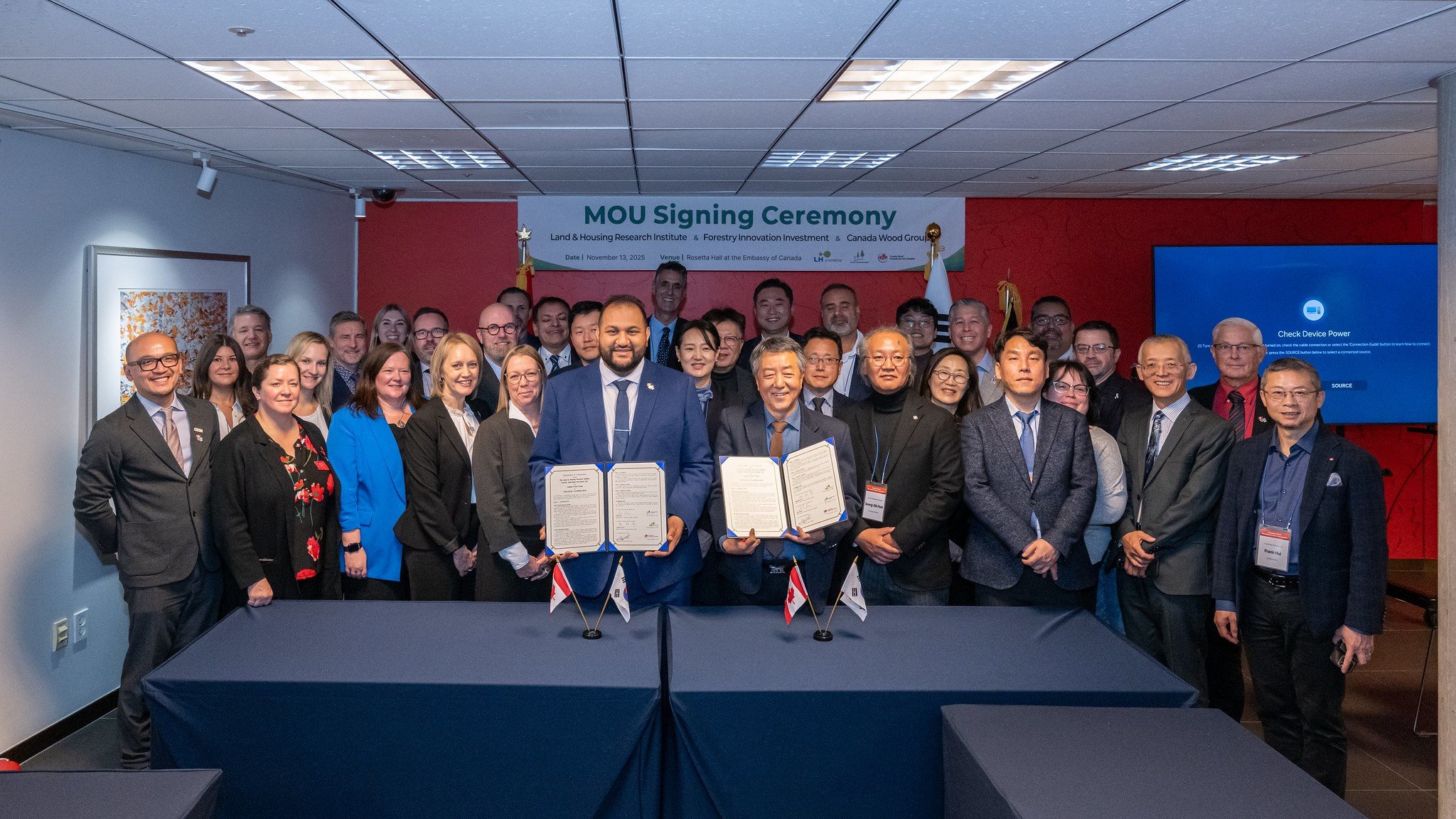
In South Korea, Canada Wood, FII, and the Korea Land and Housing Research Institute signed an agreement to promote wood‑based building in the housing sector. The Korea Land and Housing Corporation, the country’s largest housing developer, is exploring mass timber as a low‑carbon alternative to concrete. With B.C.’s expertise in mass timber and steady supply of high‑quality products, this partnership opens new opportunities in South Korea’s growing wood building market.
A Global Chapter for B.C. Forestry
The recent mission to Asia, marked by signed agreements, new partnerships and expanded opportunities in Japan and South Korea underscores B.C.’s growing role as a respected global supplier. Coupled with the launch of a new office in the U.K., these initiatives affirm B.C. as a leader in delivering high‑quality wood products that align with housing needs and climate priorities in markets worldwide.
To learn more about opportunities in British Columbia’s and connect with trade and investment representatives in Europe or Asia, visit Trade and Invest BC (TIBC), explore our resources, and follow TIBC on LinkedIn and X for the latest updates.
Related News
We Can Help
Trade and Invest BC helps facilitate foreign direct investment and has Trade and Investment Representatives in markets around the world. Contact the representative nearest you for support in investing in British Columbia.