




Canadian Mutual Recognition Agreement: One Agreement. One Market.
Summary
What does the Canadian Mutual Recognition Agreement (CMRA) do, and how does it benefit international companies entering Canada through British Columbia (B.C.)? The CMRA, signed in November 2025, simplifies interprovincial trade and further positions British Columbia as the strategic entry point for international businesses expanding into Canada.
- B.C. and all provinces, territories and federal government signed the Canadian Mutual Recognition Agreement
- The B.C.-led initiative covers thousands of products, from manufacturing inputs to health technologies
- International companies can benefit from faster time to market, lower compliance costs, predictable regulations, and easier scaling nationwide starting from B.C.
For international companies looking to enter or expand in Canada, regulatory complexity has often been a barrier to growth. Different federal and provincial rules, testing requirements and certifications could slow time to market and increase costs.
That has now changed.
With the signing of the CMRA, B.C. and its federal, provincial and territorial partners have created a simpler, more predictable way to do business across Canada and positioned B.C. as the most advantageous entry point for global investment.
Signed on November 19, 2025, by trade ministers from all provinces, territories and the federal government, the CMRA establishes a national framework that allows goods lawfully sold in one province or territory to be sold across the country without additional approvals or testing. The agreement took effect in December 2025 and applies to nearly all goods, except food.
For international businesses, the message is clear: one agreement unlocks access to the entire Canadian market — and it starts in British Columbia.

CMRA Makes It Easier for Global Companies to Scale Nationwide from B.C.
B.C. played a leading role in proposing, chairing and championing the CMRA, signalling its commitment to trade diversification, regulatory modernization and global investment.
The CMRA removes one of the most significant friction points in interprovincial trade by recognizing regulatory approvals across all 13 provinces and territories.
Implemented in December 2025, if a non-food product can be lawfully sold in B.C., it can be sold anywhere in Canada without having to identify and navigate thousands of jurisdiction-specific rules. The agreement applies to thousands of products, from manufacturing inputs and health technologies, to clothing, toys, industrial products, tires and vehicles, helping businesses grow and people benefit from greater choice.
For companies operating in manufacturing, clean technology, health technologies, industrial products, consumer goods, advanced manufacturing, and other sectors, this means:
- Faster time to market
- Lower compliance and certification costs
- Predictable regulatory outcomes
- Easier scaling across provinces and territories
Instead of treating Canada as a patchwork of regional markets, the CMRA effectively creates one unified national market — a major advantage for investors looking to establish a Canadian foothold.
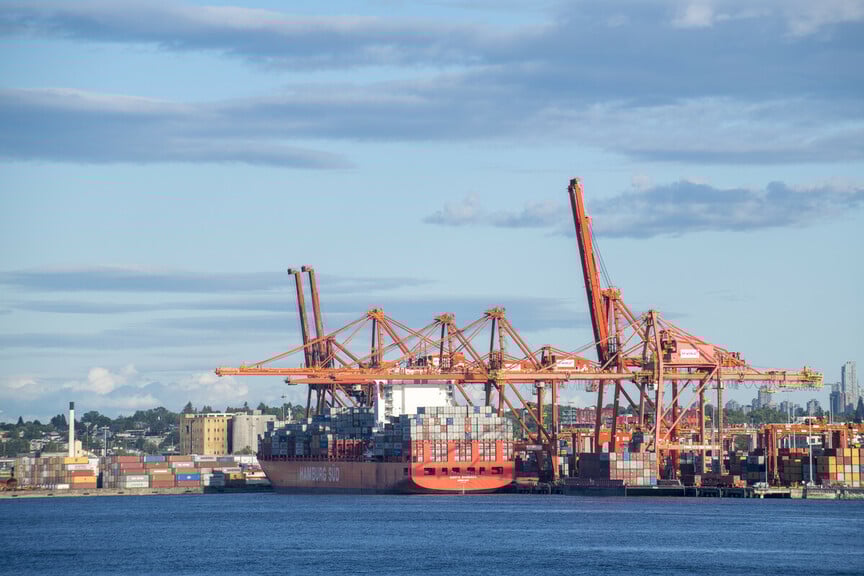
As Canada’s west coast gateway, B.C. offers clear advantages for international companies:
- Direct access to North American and Asia-Pacific markets
- World-class ports, airports and supply chain infrastructure
- A competitive business environment supported by clean electricity and advanced digital connectivity
- Strong innovation ecosystems across technology, life sciences, clean energy and advanced manufacturing
With the CMRA in place, businesses can establish operations in B.C. and confidently expand across Canada without retooling products or processes for each province.
This combination of global connectivity and seamless national market access makes B.C. a compelling landing point for international firms looking to scale efficiently.
Confidence, Consistency and Competitive Advantage
Canada is known for high-quality regulatory standards that protect consumers while supporting innovation. The CMRA preserves those standards while ensuring consistency across jurisdictions.
For international investors, this provides confidence that products approved in B.C. will meet expectations nationwide, reducing regulatory risk and supporting long-term planning.
The agreement also supports more integrated supply chains, enabling manufacturers, exporters and importers to move goods more freely across provincial borders. That efficiency strengthens competitiveness and helps businesses allocate resources toward innovation and growth instead of administrative burden.
Economic analysis suggests that mutual recognition could increase Canada’s GDP by up to 7.9%, unlocking as much as $200 billion annually by reducing regulatory delays and improving productivity.
B.C.’s Trade and Investment Strategy
The CMRA builds on B.C.’s broader efforts to strengthen interprovincial trade and reduce reliance on any single export market. It complements the Government of B.C.’s Look West Strategy and Trade Diversification Strategy, as well as its growing network of more than 50 trade and investment representatives across North America, Europe and Asia.
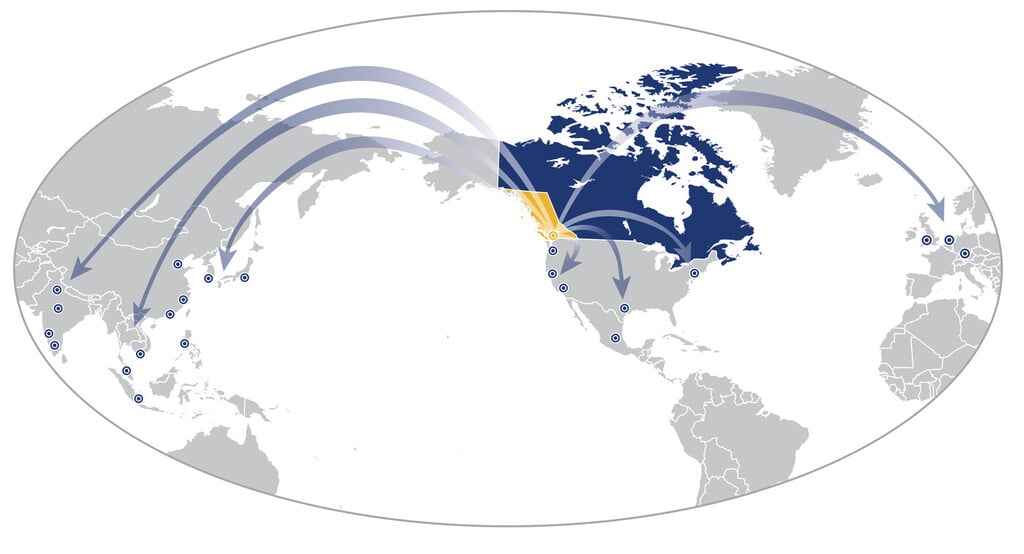
Together, these efforts reinforce B.C.’s position as a stable, forward-looking jurisdiction that welcomes global partnerships and investment.
For international businesses, the Canadian Mutual Recognition Agreement represents a rare opportunity: simplified access to a G7 economy through a single provincial entry point.
British Columbia is ready to help companies take advantage.
Learn more about the Canadian Mutual Recognition Agreement and interprovincial trade in Canada on the Canadian Free Trade website, or connect with us to discover why B.C. is where global businesses start, scale and succeed in Canada.
Related News


We Can Help
Trade and Invest BC helps facilitate foreign direct investment and has Trade and Investment Representatives in markets around the world. Contact the representative nearest you for support in investing in British Columbia.