

Choose Lower Mainland/ Southwest Region
The Lower Mainland, located in southwestern British Columbia, is one of Canada’s most diverse and densely populated economic regions. It offers businesses access to a large multilingual talent pool and a robust professional services ecosystem. The region is a global hub for film, television, visual effects, and interactive digital media, supported by specialized studios, advanced post production facilities, and an established supplier network. Leading gaming and digital media companies operate here, benefiting from strategic proximity to North American and Asia Pacific markets, competitive tax incentives, and strong capabilities in IP, AI, and cloud computing.
As Western Canada’s primary transportation and shipping hub, Vancouver connects global supply chains through its deep seaport, international air cargo capacity, Class 1 rail lines, and integrated highway networks. Key regional sectors create diverse opportunities for export oriented manufacturing, research and development, and headquarters operations.
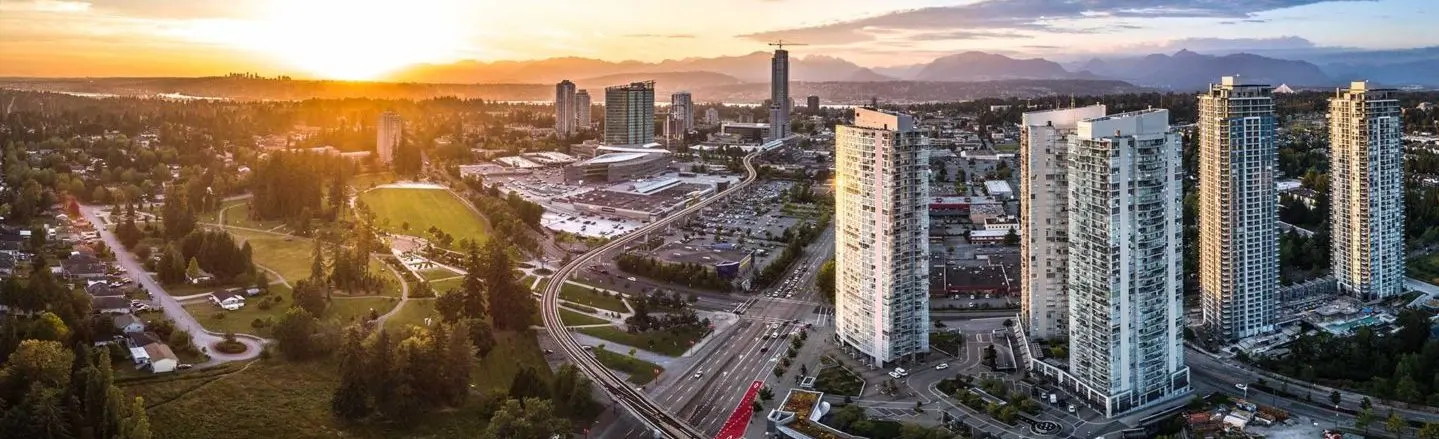
Regional Advantages
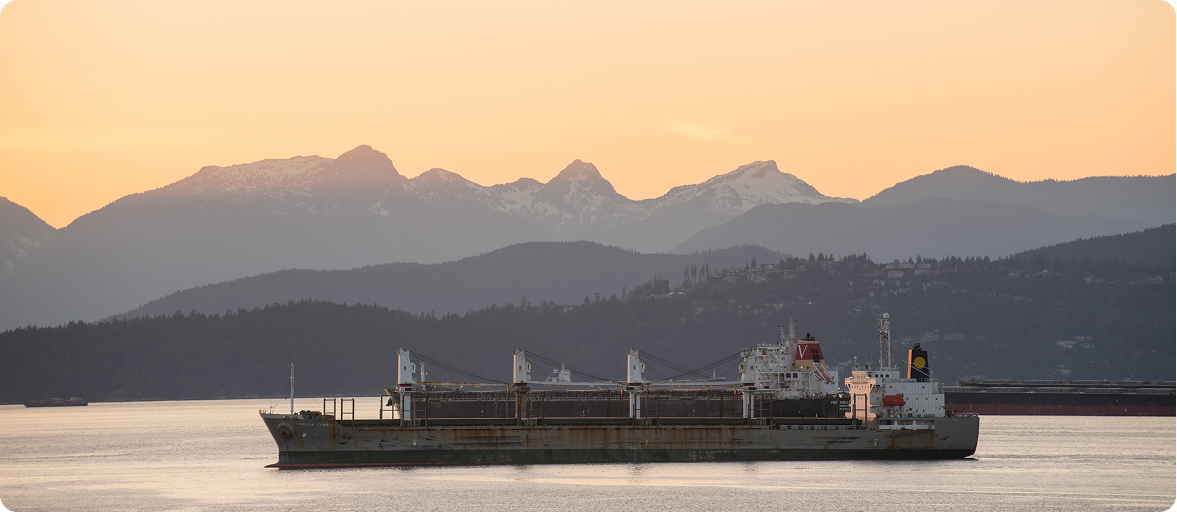
Strategic Pacific Gateway Deep-sea Port & Rail Corridor
With 29 major marine terminals, three Class 1 railroads, and facilities to support international shipping, the Port of Vancouver is Canada’s most diversified port and the country’s largest by cargo throughput, connecting Asian, North American and European trade lanes. This integrated port–rail–road platform supports containerized cargo, bulk commodities, automotive and breakbulk, enabling efficient supply chains for advanced manufacturing, agrifood exports, forestry products and energy-related shipments.
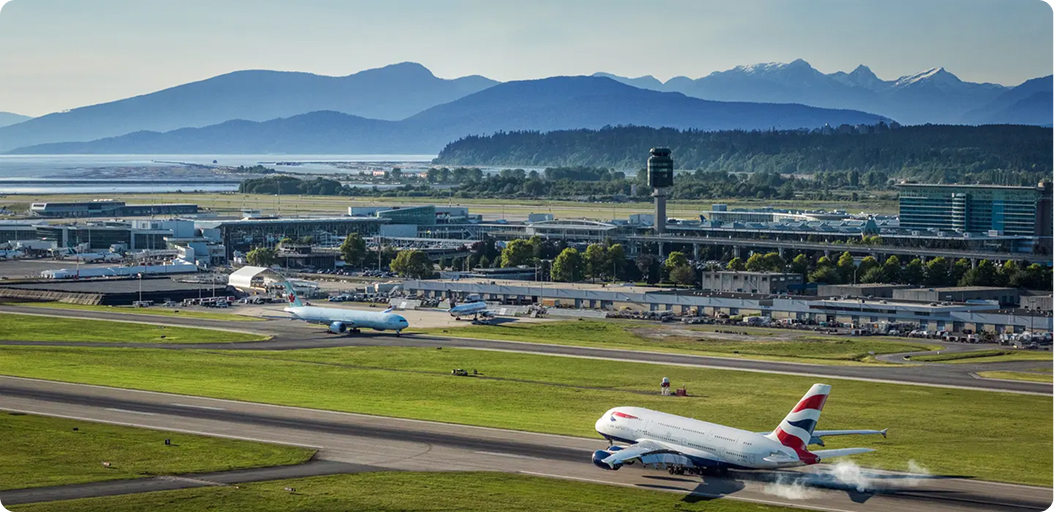
Global Passenger & Air Cargo Connectivity (YVR)
Ranked amongst the top three best airports in North America for 12-years in a row, YVR saw over 26 million passengers in 2019 and offers extensive belly-cargo and dedicated freighter capacity. Direct connections to major hubs in Asia, Europe and the Americas support time-sensitive sectors such as life sciences, high-value agrifood, e-commerce fulfillment and advanced technology components, while also facilitating executive travel and regional headquarters functions.

Emerging Quantum, AI & Computing Innovation Cluster
Located in Surrey, the Quantum Algorithms Institute collaborates with leading universities and industry partners to develop applied quantum computing solutions for logistics, finance, cybersecurity, clean energy and advanced manufacturing. This strengthens the region’s position as a testbed for next-generation computing, AI and data-intensive applications and provides investors with access to specialized research talent and commercialization pathways.
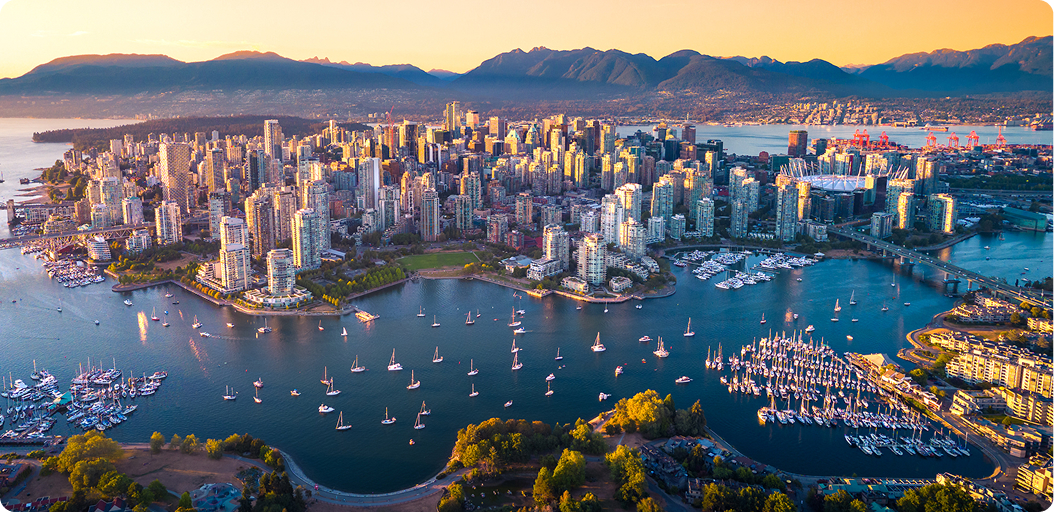
Outdoor Living For Talent Retention (Sea To Sky Corridor)
The Sea to Sky Corridor, boasts globally recognized green innovation companies in carbon capture, resource efficiency, green building and renewables as well as pilot and demonstration sites for industrial decarbonization. The corridor’s high quality of life and outdoor recreation amenities support attraction and retention of highly skilled engineers, technologists and entrepreneurs in clean tech, sport-tech and digital sectors.
Key Sectors













Economic Advantages
Squamish
Squamish is a destination, not only recognized for being situated along one of Canada’s most scenic routes, the Sea to Sky Highway, and in close proximity to Vancouver and Whistler, but for world-class recreational pursuits, with biking, hiking, backcountry skiing, wind sports, wildlife viewing and fishing all within minutes of one’s doorstep. Whether it’s the ocean-meets-mountain lifestyle, entrepreneurial spirit or strategic transportation network, more and more businesses are choosing Squamish as a home base for their operations. From clean-tech innovation, to sporting technology design, and tourism, we’re a vibrant community ready to support your business needs – no matter how big or small – and welcome you to discover the Squamish advantage for yourself.
Vancouver
Consistently rated as one of the world’s most livable cities, Vancouver is also an unparalleled place to work and invest. This dynamic metropolitan area offers economic opportunities, a mild climate, an active lifestyle and all the amenities of a vibrant urban centre. One of the most ethnically diverse areas in Canada, Mainland/Southwest is made up of the city of Vancouver and the surrounding metropolitan area (known as Metro Vancouver).
Surrey
Surrey’s fast-growing and culturally diverse population, combined with our enviable Pacific Rim location for international trade to Asia and the United States, delivers substantial business opportunities. For the fifth year in a row, the Real Estate Investment Network has named Surrey the best place in British Columbia to invest. Surrey is a member municipality of Metro Vancouver, the governing body of the Greater Vancouver Regional District. It is the province’s second-largest city by population after the city of Vancouver. It is expected that Surrey will surpass Vancouver’s population within the next ten years, making it a good time to invest in Surrey.
Abbotsford
Abbotsford is a complete city with a diverse demography, availability of land, affordability benefits, and an economy set to grow. The City’s close proximity to key transportation infrastructure including the Abbotsford International Airport, U.S. border crossings and the Trans-Canada Hwy (Hwy No. 1), make the City a prime location for growing businesses.
Chilliwack
The Chilliwack area includes the municipality of Chilliwack, the rural Electoral Areas D and E of the Fraser Valley Regional District, the District of Kent, and multiple First Nations Reserves. It is equivalent to Statistics Canada’s Chilliwack Census Agglomeration. A superb quality of life, combined with a strong economy, a low cost of living, and proximity to a multitude of amenities, make Chilliwack a destination of interest for prospective residents, businesses and investors. Chilliwack is better for business and better for life.
Communities
With 3.5 million people — nearly 61% of the province’s population — calling this region their home. Employers benefit from the province’s largest labour market, extensive post-secondary network and a broad range of professional, technical and trades skills. Richmond, New Westminster, Burnaby, Surrey, Delta, and White Rock are communities around Vancouver that contribute to the urban experience and economic value of the region, the province, and the country by hosting industrial parks, logistics hubs, office campuses, R&D facilities and export-oriented manufacturing.
The Lower Mainland is one of the most dynamic and diverse economies in North America offering competitive business services, access to capital, and urban amenities that support corporate headquarters, regional offices and innovation-intensive firms.
Regional Labour Force ProfileEconomic Development Organizations
- Invest Vancouver
- Invest Surrey
- Invest Township of Langley
- Abbotsford Economic Development
- Business in Chilliwack
- District of Squamish
- Business in Richmond
- Mission Economic Development
- Burnaby Board of Trade
- City of Coquitlam
- Advantage Hope
- City of Maple Ridge
- City of New Westminster
- City of North Vancouver
- City of Mission
First Nations
With Vancouver serving as Canada’s primary trade gateway to Asia, the region serves as a hub for many forms of economic activity. First Nations across the region are increasingly active partners in these sectors through equity participation, impact-benefit agreements, land development and joint ventures. Development corporations— owned collectively by aligned First Nations or by individual First Nations— are the primary vehicles by which First Nations pursue and advocate for sustainable economic development and long-term, stable investment partnerships.
International investors can work with these development corporations to advance projects in areas such as renewable energy, tourism infrastructure, industrial land development, housing, transportation and natural resource value-added processing.
Learn more about First Nations in BCEconomic Development Organizations
- BC Assembly of First Nations – Lower Mainland
- Leq’a:mel Development Corporation
- Musqueam Capital Corporation
- Squamish Nation Nch’ḵay̓ Development Corporation
- Tsawwassen Economic Development Corporation
- Cheam First Nation
- Lil’wat Business Corporation
- Seyem Qwantlen Economic Development
- Sto:lo Community Futures
- T’it’q’et
- Tshal’alh Development Corporation
- TTQ Economic Development Corporation
- Xaxli’p Development Corporation
Logistics & Accessibility
Educational Institutions

Simon Fraser University offers internationally recognized student co-op programs, cutting-edge researchers, and facilities in computing science, materials science, and clean energy.

BCIT offers diploma and certificate programs, and bachelor’s and master’s degrees covering subjects as diverse as applied and natural sciences, business and media, computing and IT, engineering, health sciences and trades.

Capilano University offers 97 programs, including bachelor’s degrees, post-baccalaureate and undergraduate diplomas, and certificates; as well as programs in business, paralegal, early childhood care and education, music therapy and design.

Emily Carr University (ECU) was rated as the top university in Canada for art and design and placed among the world’s top 50 universities for art and design.

Justice Institute of British Columbia (JIBC) is Canada’s leading public safety educator with a mission to develop dynamic justice and public safety professionals through its exceptional applied education, training and research.

Kwantlen Polytechnic University (KPU) offers a range of degree, diploma, certificate, and citation programs with hands-on experience and experiential learning opportunities.

The Vancouver campus of Nicola Valley Institute of Technology is a member of the Indigenous Adult and Higher Learning Association, created to work on behalf of Aboriginal-controlled post-secondary education institutes in British Columbia.

Vancouver Community College is the largest and oldest community college in British Columbia, offering certificate programs, diploma programs, and bachelor’s degree programs.

The University of the Fraser Valley offers over 100 programs, including master’s and bachelor’s degrees across more than 30 subject areas, including trades and technology programs.

The University of British Columbia (UBC) is a global centre for teaching, learning and research, consistently ranked among the top 20 public universities in the world.

Douglas College offers bachelor’s degrees, general university arts and science courses and career programs in health care, human services, business, and the creative arts.

Langara College provides university-level programs and courses and offers a variety of qualifications, including bachelor’s degrees, associate degrees, diplomas, certificates, and citations.
Connect With a Regional Expert
Regional experts can help familiarize you with the amenities, infrastructure, and opportunities in each region. They can introduce you to the economic development offices and industry associations that will support the integration of your business into the province.