




 Resources
Reinventing Chemistry with Intelligent Automation from British Columbia
Key Points:
How is the life sciences sector evolving through the integration of AI and advanced automation? Telescope Innovations is advancing AI‑enabled chemistry through automation, global partnerships and real‑world industry deployment.
- Telescope Innovations builds AI‑powered Self Driving Labs that accelerate chemical and pharmaceutical research.
- Telescope Innovations links AI predictions with automated experiments to generate reliable data and faster development outcomes.
- Its global expansion includes a major South Korea installation supported by Canadian research and trade partners.
British Columbia (B.C.) is widely recognized as a hub for life sciences innovation. The province benefits from a strong information and communications technology (ICT) sector and one of Canada’s fastest‑growing life sciences ecosystems. B.C. is also a national leader in applied and commercialized artificial intelligence (AI), with strengths spanning research, software and hardware development.
As AI becomes more deeply embedded in the life sciences sector, B.C. companies are using it to speed up discovery, support better decision‑making, and streamline research and development. One company at the forefront of this integration is Telescope Innovations, a Vancouver‑based firm that combines automation and AI to modernize chemical and pharmaceutical research for global markets.
From Academic Research to Real‑World Solutions
Telescope Innovations was founded in Vancouver in 2019 and began full operations in 2022. The company grew out of academic research led by Dr. Jason Hein at the University of British Columbia (UBC). Dr. Hein leads a renowned chemistry research program, with expertise in crystallization, chemical purification, commercial scale‑up, and the use of automation, robotics and AI in pharmaceutical manufacturing.
As chemical research problems became more complex, Dr. Hein’s group developed new tools to better understand and control chemical processes. Telescope Innovations was created to bring these tools beyond the laboratory, turning academic breakthroughs into practical technologies for industry. In doing so, the company bridges the gap between university research and real‑world applications across health, sustainability and advanced manufacturing.
Intelligent Automation for Modern Chemistry
Building on this academic foundation, Telescope Innovations develops automated platforms that help scientists work faster, more efficiently and with greater precision. Its technologies combine robotics, software and advanced analytics to improve experimental throughput, reduce manual effort and generate higher‑quality data.
At the centre of its offering are Self Driving Labs (SDLs). These fully automated systems use robotics, real‑time analytical tools and AI to design, run and refine chemistry experiments on their own. By continuously adjusting experimental conditions, SDLs can operate around the clock, dramatically reducing development timelines while improving reproducibility.
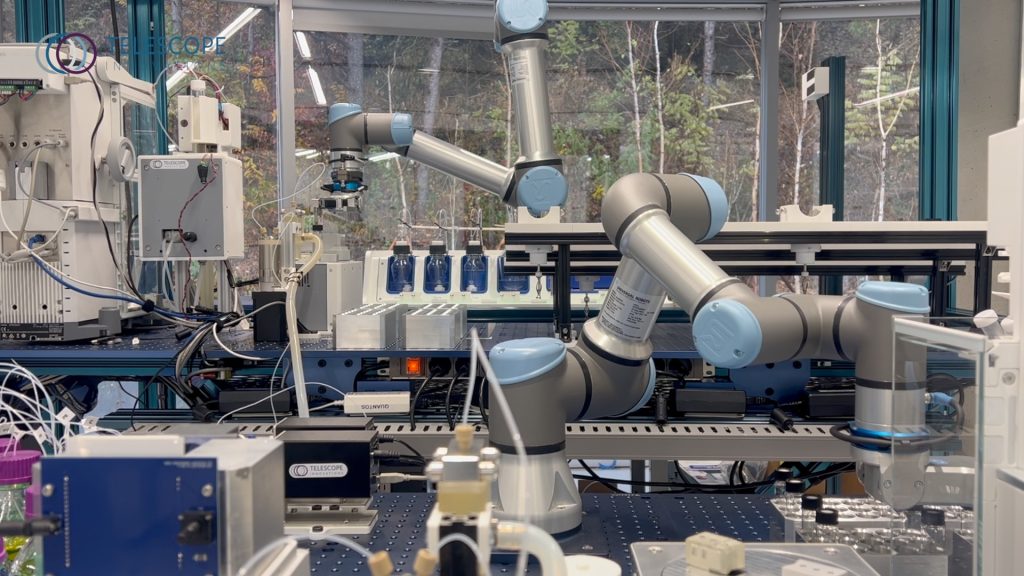
Initially adopted in pharmaceutical research, these platforms are now being applied in other sectors, including battery materials, agriculture, energy, natural resources and specialty chemicals. In each case, autonomous experimentation allows researchers to explore ideas that would be difficult or impractical using traditional laboratory methods.
Connecting Digital Intelligence with Physical Chemistry
As chemical and pharmaceutical industries move toward greater automation, AI’s real value depends on how well it connects to physical experimentation. In chemistry, models are only as useful as the data behind them and must be validated through real‑world testing.
Telescope Innovations addresses this challenge by tightly linking AI models with automated experiments. Its platforms not only test AI‑driven predictions but also generate high‑quality data that improves future models. This creates a feedback loop between digital intelligence and physical chemistry.
By serving as this critical interface, Telescope helps companies move more efficiently from early discovery to commercial‑scale production. The result is faster development, reduced risk and more predictable outcomes in pharmaceutical and advanced materials projects.
Expanding into Global Markets
With demand growing worldwide, Telescope Innovations has deployed its technologies across North America, Europe and Asia. Installations are now operating in the United States, Germany, the United Kingdom, Belgium, Japan, China, South Korea and several other European countries.
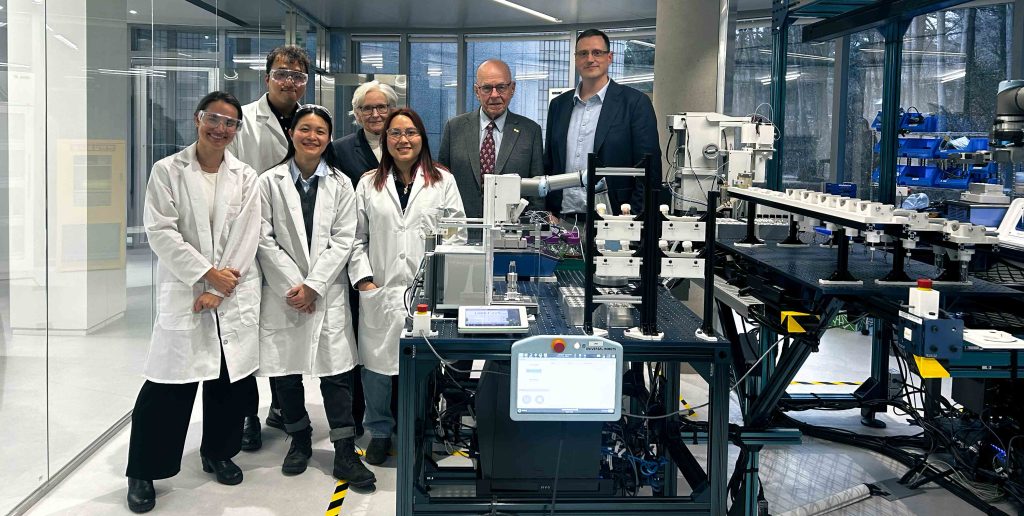
A major milestone came with the company’s entry into South Korea, where it installed the country’s first pharmaceutical Self Driving Lab at the Korean Pharmaceutical and Biopharmaceutical Manufacturers Association (KPBMA). The system was delivered to KPBMA’s new AI‑focused research and training centre in Seoul.
Representing more than 300 domestic and multinational companies, KPBMA is South Korea’s largest trade association for the pharmaceutical and biotechnology sector. Through its Convergence AI Institute for Drug Discovery, KPBMA launched the SDL initiative to promote automation‑enabled research. Telescope’s platform now serves both as advanced research infrastructure and as a hands‑on training environment for scientists and engineers.
Partnerships Enabling International Commercialization
This collaboration was made possible through a network of academic, government and industry partners. The connection between Telescope Innovations and KPBMA was established through the Acceleration Consortium at the University of Toronto, a global initiative focused on accelerating the discovery of materials and molecules for a sustainable future. Dr. Jason Hein plays a scientific leadership role within the consortium, which helped introduce Telescope to KPBMA.
Additional support came from Trade and Invest BC, Global Affairs Canada’s Trade Commissioner Service and the Province of Ontario. Canada’s participation at BIO Korea, coordinated by the Canadian Embassy’s Trade Commissioner leading on the life science sector, played a key role by bringing together a Canadian life sciences delegation and facilitating introductions. These efforts were coordinated with provincial offices from both British Columbia and Ontario co-located with the Canadian Embassy in Seoul.
Advancing Growth Through International Engagement
The partnership was further strengthened during British Columbia Premier David Eby’s trade mission to South Korea in the summer of 2025, in which Dr. Jason Hein was part of the business delegation. During the mission, Trade and Invest BC organized a networking luncheon which facilitated follow‑up discussions between Telescope Innovations and KPBMA, reinforcing the relationship’s long‑term potential.
In early December 2025, Telescope completed the installation of its Self Driving Lab just three weeks after the purchase was finalized. The rapid deployment highlighted the company’s ability to deliver fully integrated robotic and analytical systems on tight timelines.
Showcasing British Columbia Innovation Worldwide
Telescope Innovations’ success in South Korea highlights British Columbia’s strength as a launchpad for globally competitive life sciences companies. World‑class research institutions, a skilled talent pool, and coordinated federal and provincial support give B.C. companies the tools they need to scale internationally.
Through strategic partnerships and market‑entry support, Trade and Invest BC helps connect innovative firms like Telescope Innovations with opportunities around the world. These efforts reinforce the province’s reputation as a trusted partner for investment, collaboration, and long‑term growth.
To learn more about how British Columbia supports international business expansion, visit our website.
Related News
We Can Help
Trade and Invest BC helps facilitate foreign direct investment and has Trade and Investment Representatives in markets around the world. Contact the representative nearest you for support in investing in British Columbia.